Fear and Reflection at Taylor’s: Campus Stabbing Sparks Questions on Safety and Mental Health
Subang Jaya, Malaysia – On July 14, 2025, the quiet entrance of Taylor’s University Lakeside Campus was disrupted by a violent attack. A 21-year-old Chinese student allegedly stabbed his 20-year-old ex-girlfriend, also from China, leaving her with a neck injury. The victim was rushed to University of Malaysia Medical Centre, while the attacker was arrested under Section 324 of the Penal Code for causing harm with a dangerous weapon (Loheswar, 2025).
The incident, shocking both local and international students, has raised urgent questions about campus security, mental health awareness, and the adequacy of support systems available for students.
A Campus Shaken
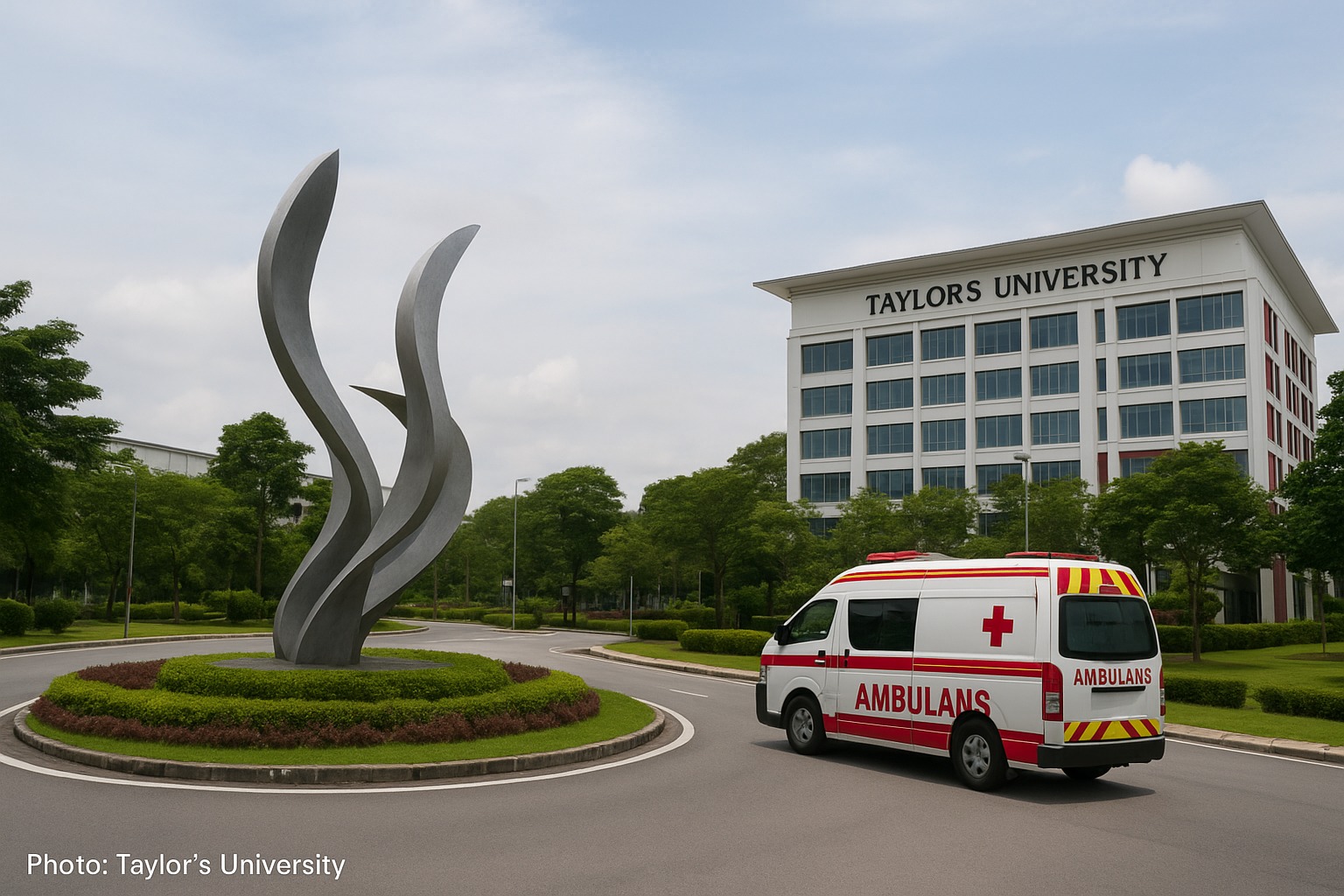
The roundabout in front of Taylor’s Lakeside Campus—where ambulances arrived that evening—has since become a quiet reminder of the tragedy. In the days following the stabbing, security presence visibly increased. However, some students say the changes came too late.
🎥
“I only started noticing more guards after the incident. Before that, we rarely saw them,” said one student. “It makes you wonder why it took something this serious for the university to respond.”
Despite repeated attempts, Taylor’s University declined to comment officially. Emails to the administration went unanswered, and requests for interviews with university counselors were rejected. Security guards on duty, when approached, appeared unaware of the details of the incident.
The Struggles Beneath the Surface
Students interviewed expressed mixed feelings—fear, unease, but also a need for greater emotional support.
“Honestly, I don’t feel as safe anymore,” said another international student. “I didn’t even know we had mental health services on campus until after this incident.”
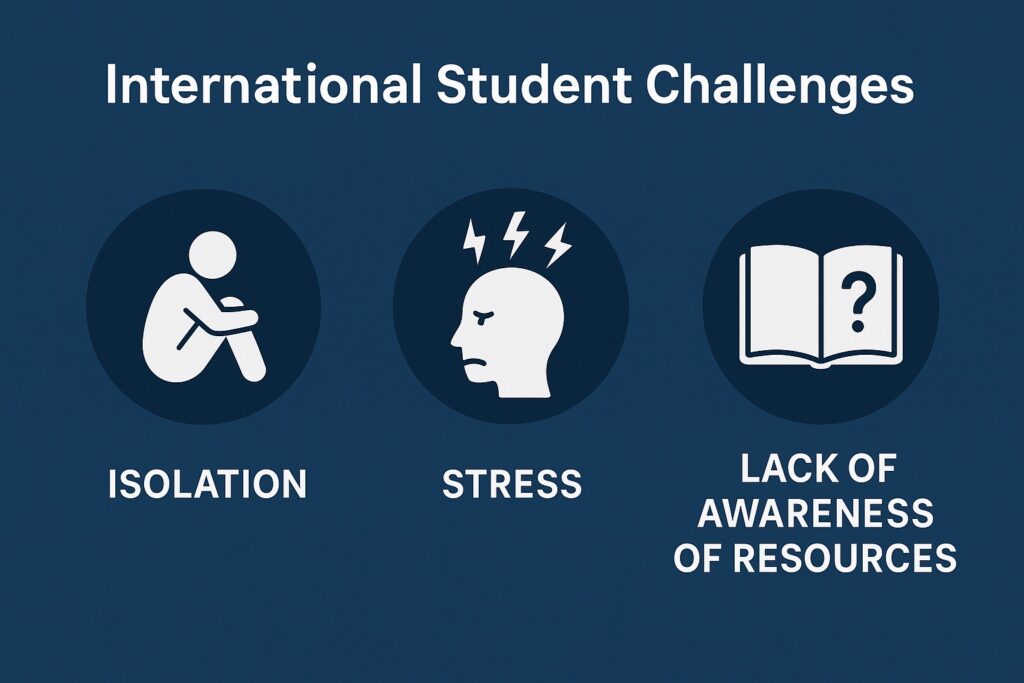
Experts argue that the stabbing exposes gaps not only in physical safety but also in emotional and psychological support for students. International students, in particular, face barriers such as language, cultural isolation, and lack of family networks.
Missed Warnings and Mental Health Gaps
Counselors we approached outside the university provided context on relationship abuse and early intervention.
- Universities often lack proactive systems to identify emotional distress or toxic relationship patterns.
- Early warning signs—withdrawal, sudden behavior shifts, or controlling relationships—are often missed by peers and staff.
- Many students remain unaware of counseling services or fear stigma if they seek help.
One counselor noted:
“Mental health awareness among students is improving, but not enough. Many don’t know how to recognize abuse or how to seek help until it’s too late.”
A Call for Change
This tragedy is more than an isolated event—it’s a wake-up call.
- Safety protocols must be made more visible and accessible.
- Mental health awareness campaigns should normalize seeking help.
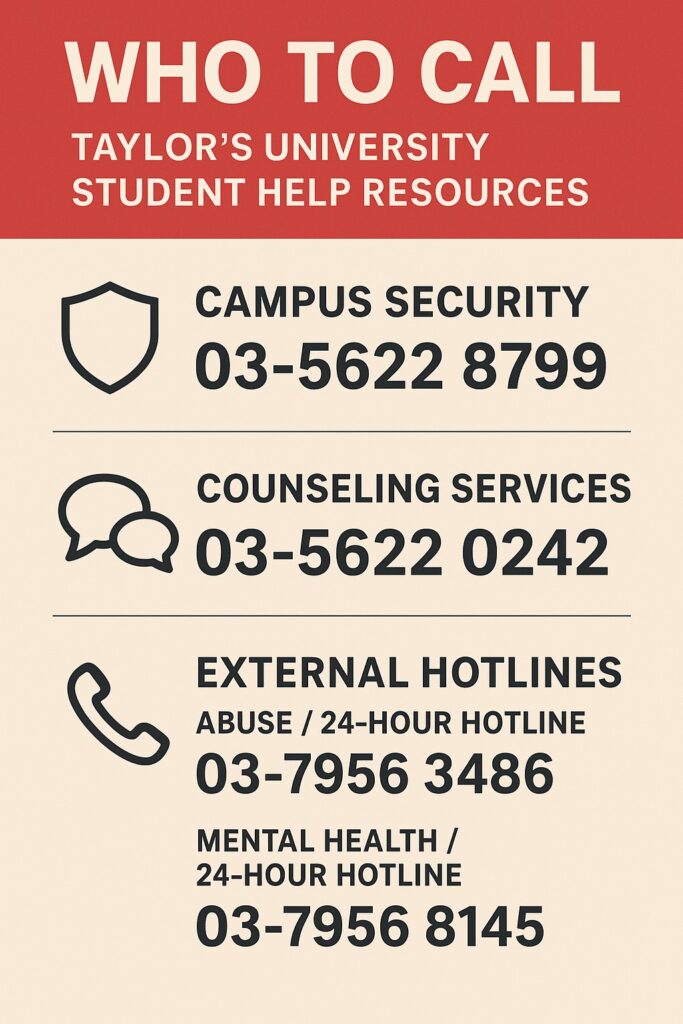
- International student support services need expansion, with language-sensitive counseling and better orientation on available resources.
🎥
As one student reflected:
“This incident made me realize we don’t talk enough about toxic relationships or emotional abuse here. We need safe spaces to have these conversations.”
Conclusion: From Tragedy to Reform
The July 14 stabbing revealed fractures in the university’s safety net. Students, counselors, and observers agree: better systems of prevention, intervention, and awareness are needed before another tragedy occurs.
📊
This story is not just about one violent act—it’s about the culture of silence, the lack of visible support, and the urgent need for institutions to act decisively for the safety and well-being of every student.